Chapter 1: The Rusted Latch
The lunchbox hit the bottom of the steel wastebasket with a flat tin clang, like a dropped pan.
I remember that sound more clearly than anything else in that room. My mother carried that lunchbox into eleven houses over twenty-six years, and I had just watched a stranger throw it away like trash.
I’m going to tell you how I ended up at that dining room table. And what I said to her next.
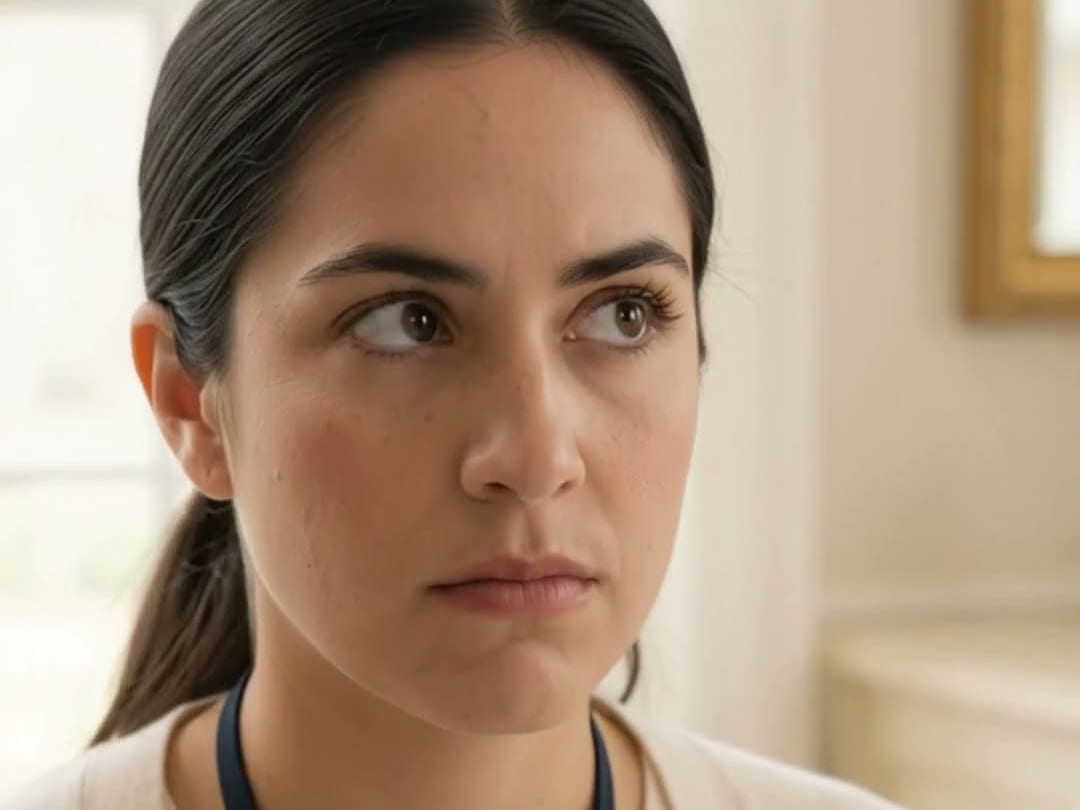
My name is Lena Moreno. I’m twenty-four. My mother, Rosa, was a nanny for twenty-six years, in eleven different houses, and she ate lunch in nine of them standing up.
In one house she ate in her car. It was August, and the car had no air conditioning. She never told the family why she came back to the house red in the face.
She told me when I was sixteen. She laughed about it, the way she laughed about everything that hurt.
Twelve years ago she started the agency in our spare bedroom. A card table, a landline, a three-ring binder of nannies she trusted and families she had checked herself.
She wrote the Household Terms on that card table too. Two pages, then three. Every family that wanted one of her nannies signed them.
Page three is the one that matters. Every nanny gets a meal, a seat at lunch and a thirty-minute break. No wages docked for accidents. No humiliation.
A family that breaks those rules comes off the list. No appeal. My mother put that sentence in herself, in blue pen, and she never once had to use it.
Three other agencies in the county signed on to it over the years, one by one. A family taken off one list is off all four.
She died two years ago. I was twenty-two. I had a two-year degree in early childhood education and three years of nannying behind me, and I had a binder.
So I became the agency. Thirty-one nannies, sixty-some families, one coordinator named Priya Nair, and a kitchen table where we all still ate lunch together on Fridays.
That is who I was on the Monday it happened. That is also who nobody in the Sullivan house knew I was.
The Sullivans came to us fourteen months ago, in March. A big house on a quiet street in Hartwell Hills, a husband who traveled, a two-year-old boy. Mrs. Audrey Sullivan signed the Household Terms at her kitchen island with a gold pen. Priya handled everything.
Their first nanny, Tess, lasted eleven days.
The second, Marisol, lasted three weeks. The third was Dolores, who is fifty-eight and has raised four children of her own, and who called Priya from a parking lot after twenty-six days and could not stop crying long enough to finish a sentence.
Three more came after her. None made it past a month.
Every one of them told Priya the same thing, in slightly different words. The lady of the house treated them like furniture. They were allowed to be there. They were not allowed to be seen.
Tess said Audrey docked a hundred and forty dollars from her pay for a cracked serving bowl. The bowl had a crack in it before Tess ever touched it.
Marisol said she was told to eat her lunch in the garage.
Dolores said Audrey threw out her thermos of soup because it “smelled up the kitchen,” and then Audrey did it again the following week.
And when Tess quit, Audrey called Priya. A ring had gone missing from her dresser. She wasn’t accusing anybody, she said. She only wanted us to know.
Tess had spent that whole Saturday at the park with Owen. She said so twice. The ring turned up four days later. Nobody called to say so.
I asked every one of them to write it down. Dates, times, exact words. Tess said no. Marisol said no. Dolores said no.
They were all afraid of the same thing. It would be their word against hers, a young woman against a woman with a gold pen and a big house. And Audrey knew a lot of people in Hartwell Hills who hired help.
So I did the only thing I could think of. I took the job myself.
I was twenty-four and I looked it. Audrey would never connect a girl in a cream cardigan with a name on the agency’s paperwork she had never read. Priya had always done the talking. The contract had Priya’s signature on our side of the page.
I came as one of our experienced nannies. I used my own name. I changed nothing except one thing: I did not say what I owned.
I told Priya I’d give it two weeks. Priya told me I was out of my mind. Then she asked if I had my mother’s lunchbox. I always did.
Audrey Sullivan was forty-one and always looked like she was about to be photographed.
On my first morning she opened the front door in a green silk dress at seven o’clock, with gold earrings and a low, glossy bun. She looked at my sneakers before she looked at my face.
She did not shake my hand. She walked me through the house like she was showing me where the fire extinguishers were.
“The kitchen is yours,” she said. “The family room is not. The front stairs are not. Anything Owen touches, you wipe. Anything you touch, you wipe.”
My lanyard hung on my chest. Every nanny we place wears one, a navy cord with a plain white card.
The front carries only the agency’s teal crest, a small shield with an open book across it. The name goes on the back.
I wear the same card at every placement, because my mother said a nanny should always be able to prove who she works for.
Audrey looked at the cord for exactly one second. She never read the card.
“Turn that around,” she said. “It looks like a hospital in here.”
So I turned the badge face-down against my chest. I kept it that way for nine days. I thought it was the luckiest thing that happened all week.
Then she took me to the hallway and held up her phone.
“There are cameras in every room except the bedrooms and bathrooms,” she said. “Audio too. I keep a year of everything. Staff steal. You’d be amazed.”
She tapped the screen and showed me a grid of little windows, her whole house in black and white and color. The dining room. The kitchen. The garage.
“My husband never opens the app,” she said. “I do.”
I said that was fine. I said I had nothing to hide.
She gave me a small smile. It was the only one I got that day, and it had no warmth in it. It looked like something she had put on the way she put on her earrings.
Owen was in the family room, on a play mat, lining up wooden blocks by color. He was two and he was serious about it.
He looked up at me, at my ponytail and my cardigan, and he held out a green block. That was the whole interview.
I loved him by lunchtime. That’s the part nobody warns you about. You go into a house like that with a plan and a notebook, and a two-year-old hands you a block.
Here is how my nine days went.
I got there at seven. Owen woke at seven-fifteen. I did breakfast, the park, the nap, the bath, the books. I wrote things down in my head, every sentence that made me stop moving for a second, and I typed them into my phone in the laundry room at night.
She never raised her voice. That was the thing. Audrey Sullivan never needed to. She had a way of saying “Lena” that turned my name into an instruction.
She told me to use the back stairs. She told me not to leave my coat in the hall. She told me, on day four, that the other girls had always eaten in the laundry room, and that it was “more comfortable for everyone.”
So I ate in the laundry room. Standing, beside the dryer, with a sandwich in my hand and one eye on the clock.
I should say that I have eaten lunch in worse places. But my mother would have been sick if she had seen it. Page three of the Household Terms, signed in March in that woman’s own handwriting, says a nanny gets a seat.
On the ninth day, a Monday, my phone buzzed in my pocket while I was folding Owen’s laundry. It was Priya.
Twelve on the bench, she wrote. Everyone’s ready to start tonight if you need them.
I almost laughed. The agency keeps a list of nannies between placements, women who are trained and checked and waiting for the right family. That week we had twelve.
I put the phone away. I had made up my mind about something that morning.
Page three says a nanny gets a seat at lunch. For nine days I had stood beside the dryer. That Monday I wanted to see what would happen if I simply sat down, once, in the room where this family eats, with nothing to hide.
Owen had his lunch on the family room floor, because he will not eat unless I eat beside him. Then he went down for his nap at noon with his giraffe, and I stood in his doorway until his breathing slowed.
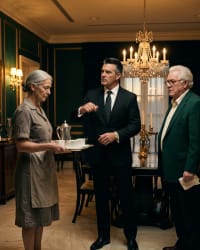
At twelve-forty I carried the salad plates into the dining room for Audrey and her guest. Priscilla Dane, a friend from the Thursday lunches, was due at one.
Then, instead of walking back out, I pulled out the chair at the far end of the long table, the one farthest from the two place settings. I set my mother’s lunchbox on the white tablecloth and sat down.